AI as Essential Digital Infrastructure — Beyond Its Original Role as a Tool
For much of the past decade, Artificial Intelligence was treated as an optional capability. Organisations debated whether to experiment with it, pilot it in isolated projects, or ignore it altogether. AI largely remained confined to research environments, innovation labs, and standalone systems that sat outside everyday business operations.
By 2026, that framing no longer holds.
Artificial Intelligence now functions as essential digital infrastructure — the operational backbone through which organisations run their businesses, make decisions, and pursue growth. What was once a discretionary investment has become a baseline expectation. This shift has fundamentally altered how organisations lead, govern, and compete.
From Optional Capability to Foundational Layer
Early AI adoption focused on potential. Could machines identify patterns more efficiently than humans? Could algorithms automate certain decisions? Could large datasets improve forecasting and performance?
Those questions have now been answered.
Today, AI systems routinely:
Prioritise work and allocate resources
Support real‑time decision‑making
Optimise workflows across functions
Identify risks and opportunities before they surface
Crucially, these capabilities no longer exist as separate “AI tools”. Leading organisations integrate AI directly into their core platforms — from finance and operations to customer service and workforce systems. AI no longer sits alongside the business; it runs through it.
Why Infrastructure Changes the Rules
This shift from tool to infrastructure changes everything.
Tools can be trialled, replaced, or abandoned with minimal impact. Infrastructure cannot. AI systems now support planning, forecasting, compliance, and customer engagement simultaneously. As a result, they must be trusted — consistently and at scale.
Three consequences define this new reality:
AI performance now shapes organisational performance
Weak data quality, biased models, or inadequate oversight no longer cause isolated issues. They create systemic risk.Governance is a leadership responsibility, not a technical one
Boards and executive teams are accountable for how AI is used, how decisions are made, and how risk is managed.Trust matters as much as accuracy
When systems operate invisibly, organisations must ensure transparency, explainability, and alignment with their values.
AI infrastructure demands the same — if not greater — discipline as financial management, cyber security, and operational controls.
The New Competitive Advantage: Depth of Integration
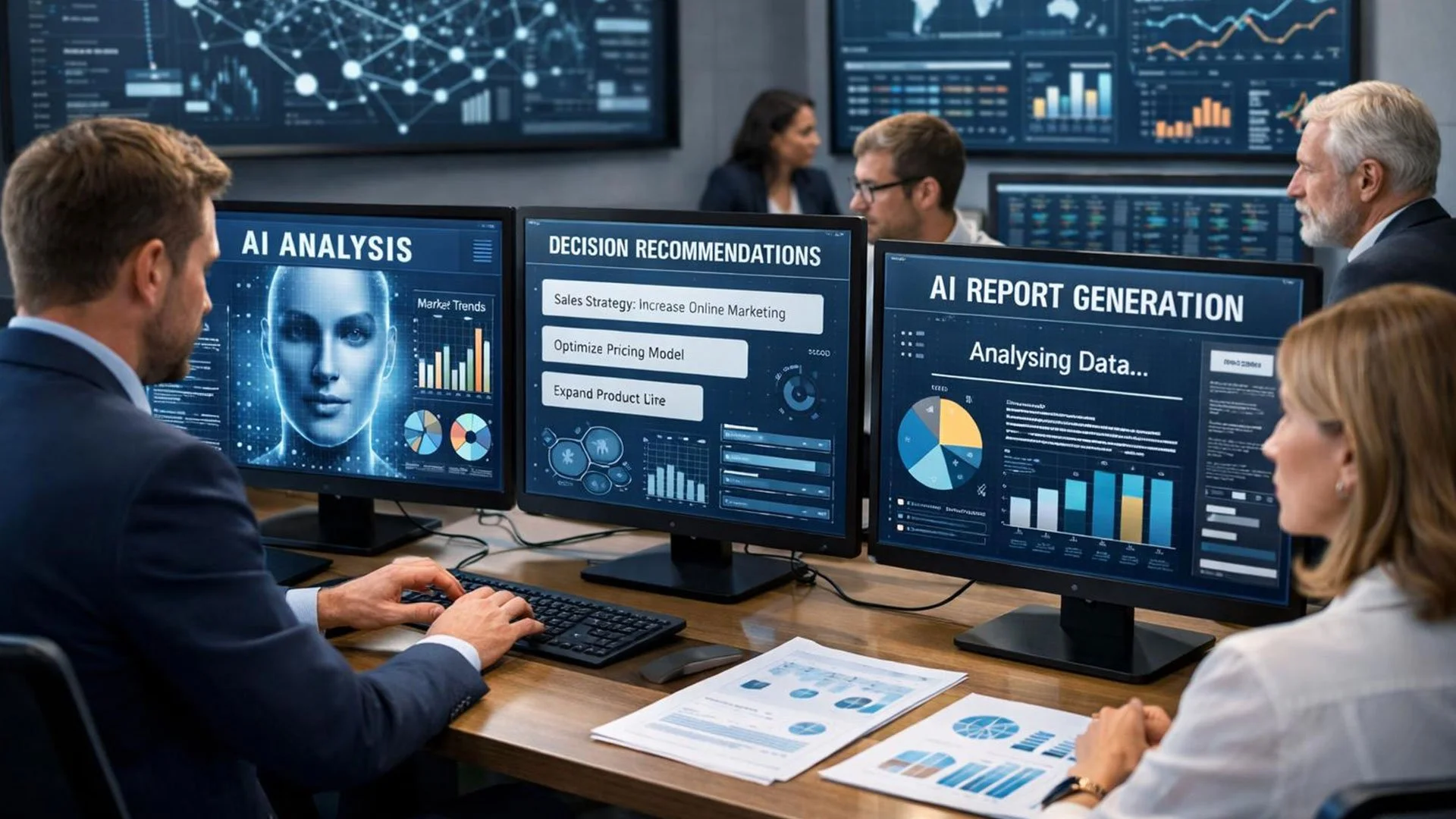
In the early days, advantage came from having access to AI. By 2026, access is universal. Differentiation now depends on how deeply AI is integrated.
Leading organisations embed AI so that:
Intelligence flows across multiple functions, rather than being siloed
Insights are embedded directly into decision‑making processes, not just reports
Automation supports execution, not merely analysis
This depth of integration enables faster action without chaos. Organisations scale more smoothly, reduce hand‑offs, and improve delivery reliability. The result is a quieter but more durable competitive advantage — one that is difficult to replicate.
Increasingly, the most effective AI strategies are not the most visible. They are the ones that work.
What This Means for Leadership
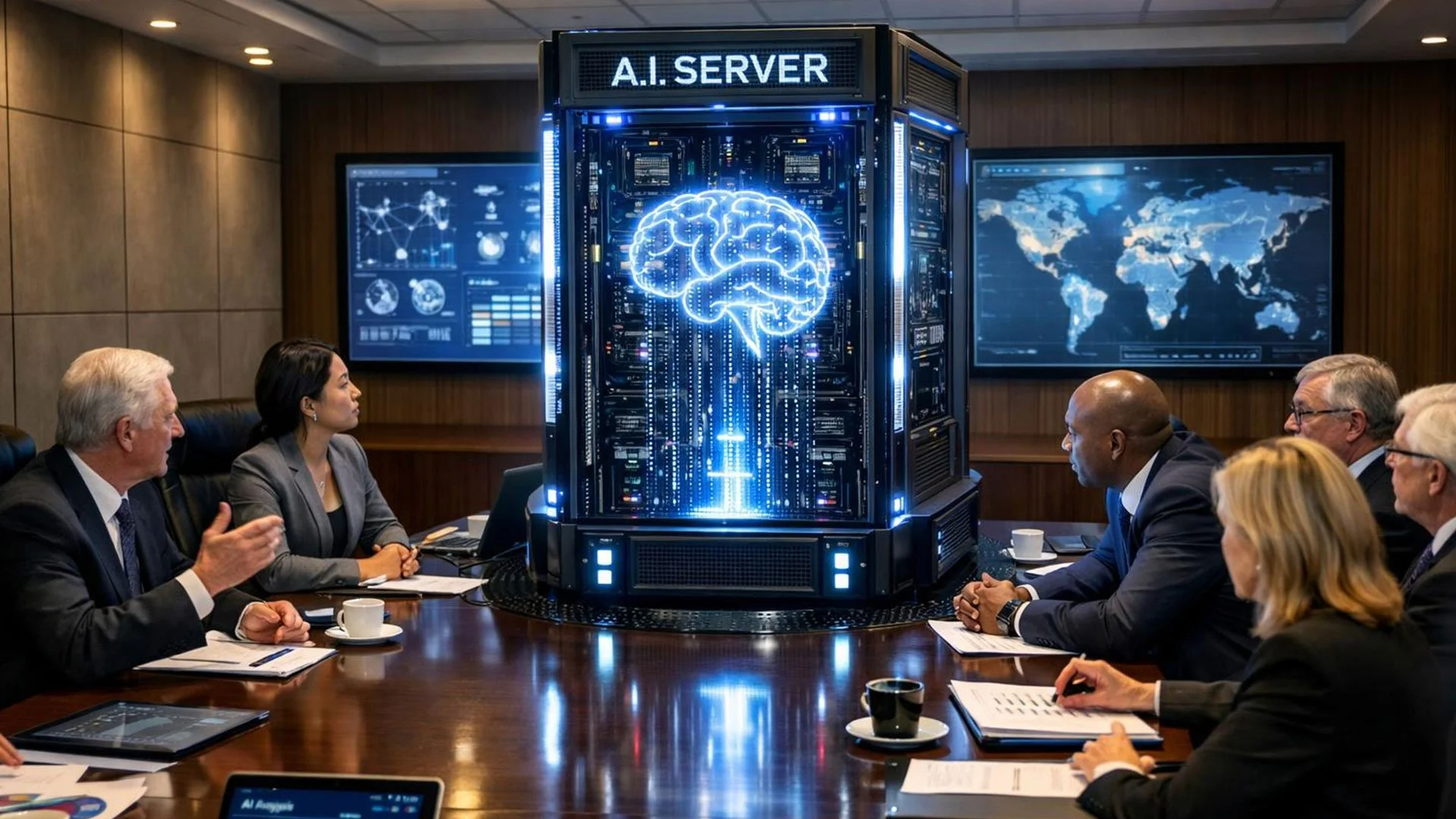
As AI becomes infrastructure, leadership expectations change.
Executives are no longer sponsors of experimental initiatives. They are owners of systems that shape daily decisions. This requires leaders to:
Set clear principles for how AI is used in operations
Ensure accountability for AI‑driven outcomes
Understand where and how AI influences critical decisions
Leaders do not need to become technical experts. They need to ask better questions, such as:
Which decisions depend on AI today?
What data underpins those systems?
Where are the risks if the system fails or behaves unexpectedly?
The Workforce Shift: From Using AI to Working with It
As AI infrastructure expands, the nature of work evolves.
Employees are no longer simply using AI tools on demand. They are working alongside systems that continuously prioritise tasks, suggest actions, and optimise workflows. Human value increasingly lies in judgment, oversight, and the ability to challenge automated recommendations when context demands it.
This is not a reduction of human contribution, but a redefinition of it.
The Risks of Invisible Intelligence
Infrastructure is powerful precisely because it fades into the background. That invisibility, however, introduces risk.
Organisations that fail to govern AI infrastructure face:
Over‑reliance on automated decisions
Bias embedded at scale
Reduced resilience when systems fail
The greatest danger arises when trust replaces scrutiny.
Responsible organisations counter this by building in:
Clear escalation and override mechanisms
Regular reviews and audits of AI systems
Visibility into the real‑world impact of AI decisions
“Invisible does not mean unaccountable.”
A Silent Evolution with Lasting Impact
The most striking aspect of AI’s evolution is how quietly it has occurred.
Employees encounter fewer obstacles. Customers experience smoother interactions. Leaders see more consistent outcomes. As with any mature infrastructure, the technology itself recedes from view.
History shows that the most transformative technologies ultimately disappear into normality — not because they are unimportant, but because they are trusted.
Looking Ahead
By 2026, organisations that continue to treat AI as an add‑on will struggle to keep pace. Competitive advantage will not come from acquiring more tools, but from embedding intelligence at the core of operations.
Those that succeed will not be the loudest adopters of AI — but the ones for whom it has quietly become indispensable.