Cloud Gaming Goes Mainstream
Cloud gaming has reached a tipping point in 2026, moving decisively from niche adoption to everyday use. Improvements in broadband speeds, mobile connectivity and server‑side optimisation now allow high‑fidelity games to be streamed reliably across TVs, laptops and mobile devices, removing the need for dedicated hardware. As latency drops and visual quality improves, cloud delivery is increasingly viewed as a viable primary way to play rather than a secondary option.
In practical terms, cloud gaming enables seamless device switching and near‑instant access to large game libraries, a shift that has lowered entry costs and expanded the addressable gaming audience. For publishers, the model simplifies distribution, limits piracy and standardises performance across platforms. Industry momentum suggests cloud gaming will continue embedding itself into consumer hardware, particularly smart TVs and portable devices, where native support is becoming standard rather than optional.
Artificial Intelligence Reshapes Game Development
Artificial intelligence is now embedded across the game development pipeline, influencing everything from world generation to narrative design. In 2026, AI systems are being used to create more responsive environments, with non‑player characters that adapt to player behaviour, track past interactions and adjust decision‑making in real time. This has reduced reliance on rigid scripting and increased the sense of persistence within game worlds.
From a production standpoint, AI‑assisted tools are allowing studios to scale content more efficiently, supporting procedural environments, dynamic dialogue and personalised side content. For players, this translates into higher replay value and more tailored experiences. Looking ahead, the continued expansion of AI‑driven design is expected to blur the line between authored and adaptive content, raising strategic questions around creative control, consistency and player agency.

Cross‑Platform Play Becomes the Baseline
Cross‑platform play has effectively become a baseline expectation rather than a differentiating feature. Players now assume they can connect with friends across console, PC and cloud ecosystems, reflecting a broader shift towards platform‑agnostic gaming communities. Titles that fail to support cross‑play increasingly risk fragmented player bases and reduced long‑term engagement.
Data from live‑service performance trends shows that cross‑platform games typically maintain healthier matchmaking pools and longer content lifecycles. For players, the benefit lies in hardware freedom and uninterrupted social access, while developers gain scale and retention. Future expansion is likely to focus on deeper integration, including shared progression systems, unified economies and cross‑platform social layers that persist beyond individual titles.
VR and AR Move Beyond Early Adoption
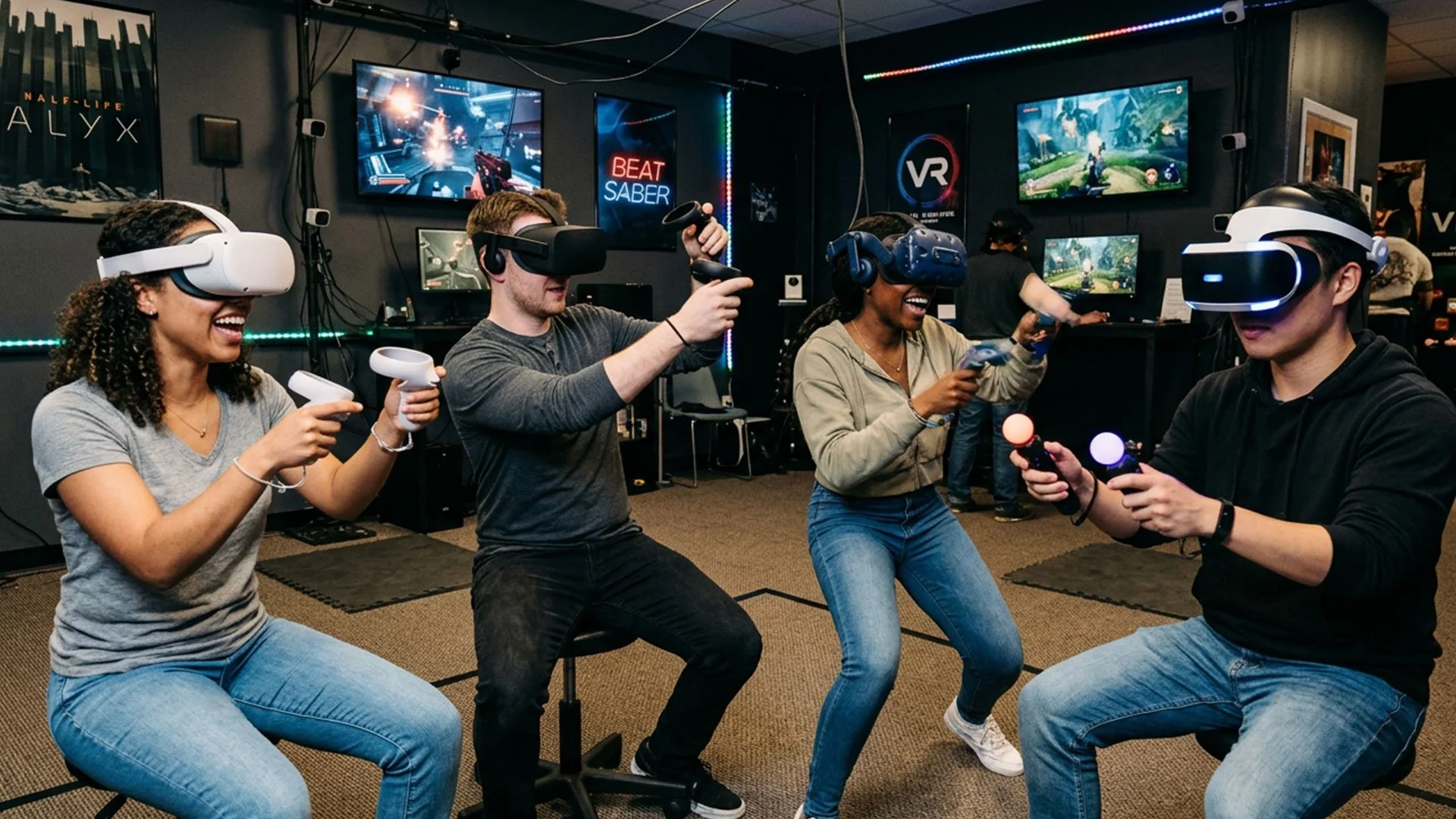
Virtual and augmented reality have entered a more stable phase of growth. In 2026, improvements in headset ergonomics, display resolution and pricing have broadened adoption, particularly among users seeking immersive or activity‑driven experiences. The focus has shifted away from novelty and towards sustained engagement, with developers prioritising comfort, usability and content depth.
VR continues to gain traction in narrative, social and fitness‑oriented games, while AR applications increasingly blend digital systems into real‑world environments with minimal friction. These technologies offer higher levels of presence and spatial interaction, supporting use cases beyond entertainment, including education and professional training. As hardware becomes lighter and mixed‑reality systems mature, immersive gaming is expected to integrate more naturally into everyday routines.
Subscription Models Redefine Access and Value
Subscription services have reshaped how players access games, accelerating a shift from ownership to on‑demand access. In 2026, monthly subscriptions provide entry to large, rotating libraries across console, PC and cloud platforms, reducing upfront costs and encouraging broader experimentation. For many players, subscriptions now serve as the primary point of entry into new releases and genres.
While the value proposition is strong, the model introduces trade‑offs, particularly around content rotation and long‑term access. As competition intensifies, subscription services are increasingly differentiated through curated libraries, personalised recommendations and tiered pricing structures. The trend points towards more flexible, data‑driven offerings aligned with individual play habits rather than one‑size‑fits‑all access.
What This Means for the Future of Gaming
Taken together, these trends signal an industry that is more accessible, adaptive and interconnected than at any previous point. Cloud infrastructure reduces hardware dependency, AI enhances responsiveness and scale, cross‑platform play strengthens communities, immersive technologies deepen engagement and subscription models reshape consumption patterns.
The direction is clear: gaming in 2026 is increasingly defined by flexibility and continuity rather than fixed devices or formats. The next phase of growth will be shaped not just by technology, but by how effectively platforms and developers align these systems around player behaviour and expectations.
“Which of these trends do you think will most influence how you play over the next few years — and why?”