Wisdom from Japan for a Meaningful Life
Japanese philosophy provides a peaceful and stable approach to life in the modern world, which pushes people to speed up their actions and accomplish more while continuously measuring their worth against others. The practice encourages us to slow down, live intentionally, and find harmony within ourselves and with others instead of pursuing quick accomplishments or sudden transformations. A meaningful life, according to this perspective, requires a foundation through patient and thoughtful actions instead of urgent decisions.
Japanese wisdom teaches us that personal growth does not require adopting a different identity. It is about returning to what truly matters, honouring simplicity, and recognising the beauty of everyday life. The following principles provide both motivational elements and useful strategies to achieve better clarity and purposeful living through peaceful existence.
1. Ikigai: Live for What Makes You Feel Alive
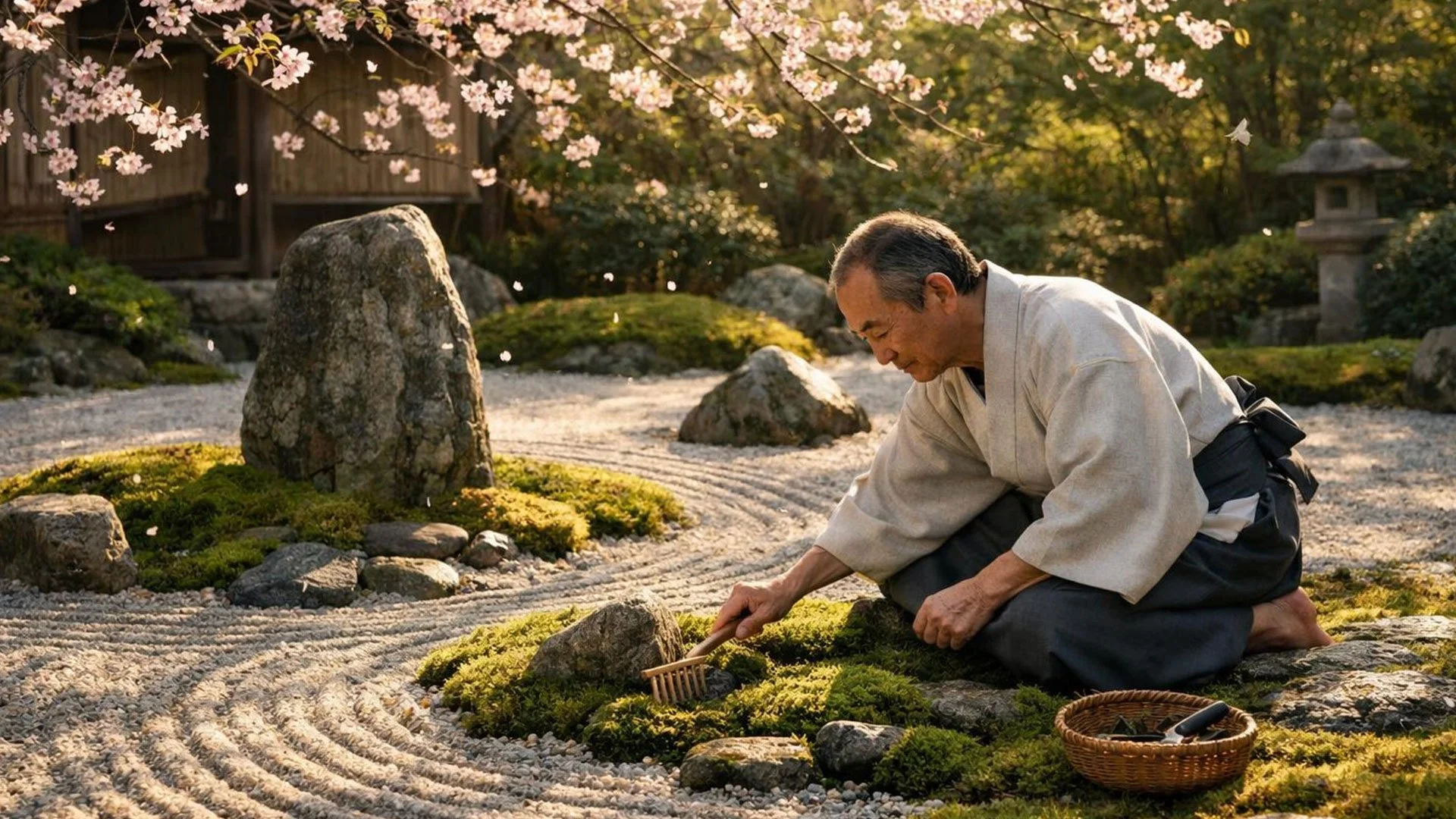
Ikigai means “a reason for being”. It is the quiet motivation that gives meaning to ordinary days. People discover their Ikigai through basic activities which provide them with purpose rather than pursuing grand life objectives. These activities include developing relationships, mastering skills, helping others and finding joy in everyday activities.
“Your Ikigai rarely announces itself loudly; it reveals itself gently through consistency and care.”
How Ikigai Enriches Life
It gives life meaning without pressure.
It replaces burnout with sustainable motivation.
It grounds you in the present while giving hope for the future.
Living with Ikigai
Pay attention to what energizes you.
Notice the tasks that absorb you fully.
Allow purpose to evolve instead of forcing it.
A life guided by Ikigai feels steady, rich, and deeply human.
2. Kaizen: Improve Gradually and Consistently
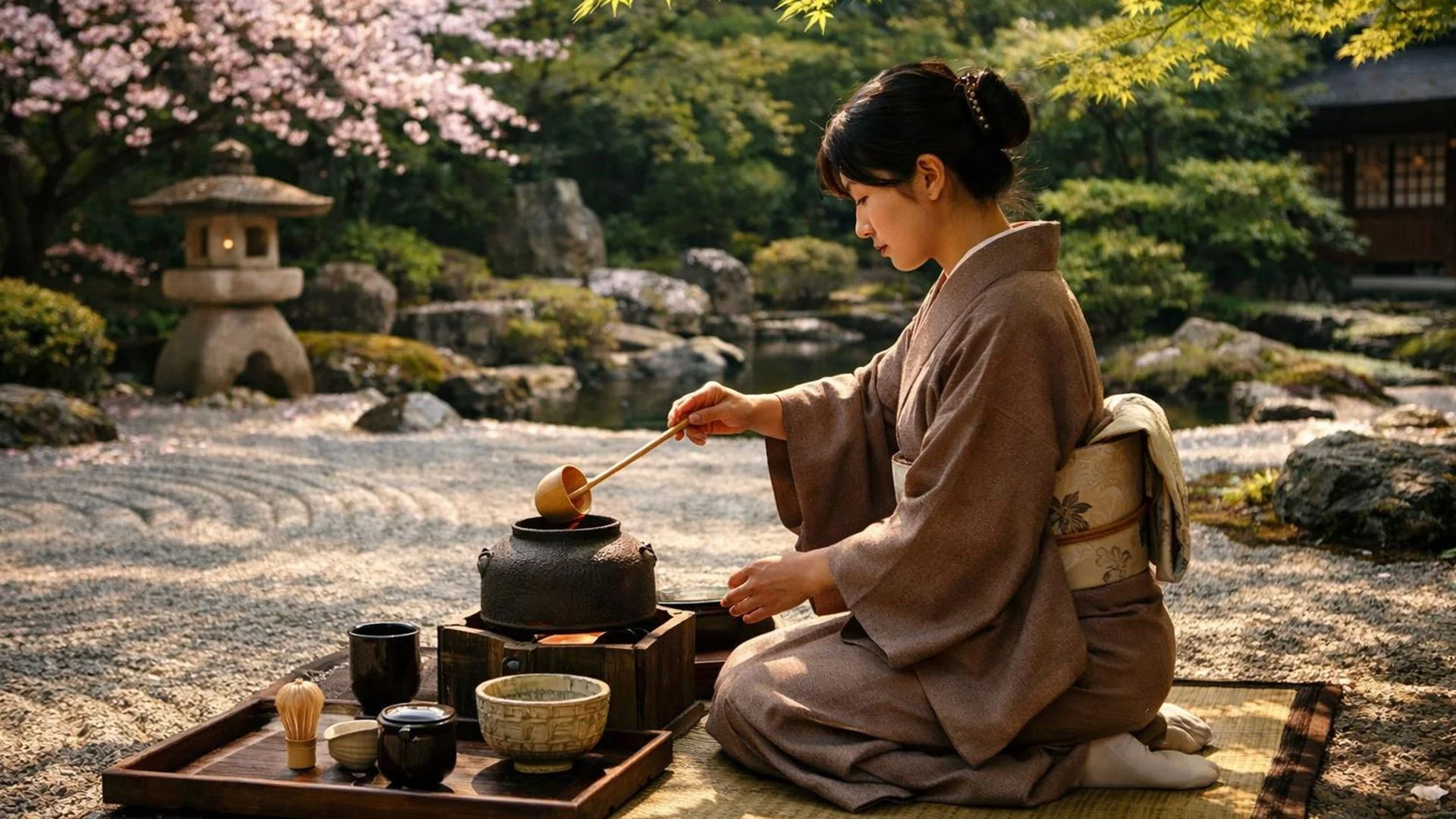
Kaizen means “change for the better” and centres on small, continuous improvement. The method demonstrates that real progress occurs through steady, gradual development instead of intense bursts of work.
“You do not need to be better than yesterday—just slightly more awake to today.”
Why Kaizen Works
Makes growth less overwhelming.
Encourages discipline without exhaustion.
Progress is made through steady practice instead of short bursts
Applying Kaizen Daily
Improve by 1% in any area.
Focus on consistency over intensity.
Respect patience as a form of strength.
Tiny improvements, repeated daily, quietly shape an extraordinary life.
3. Wabi-Sabi: Accept Imperfection and Impermanence
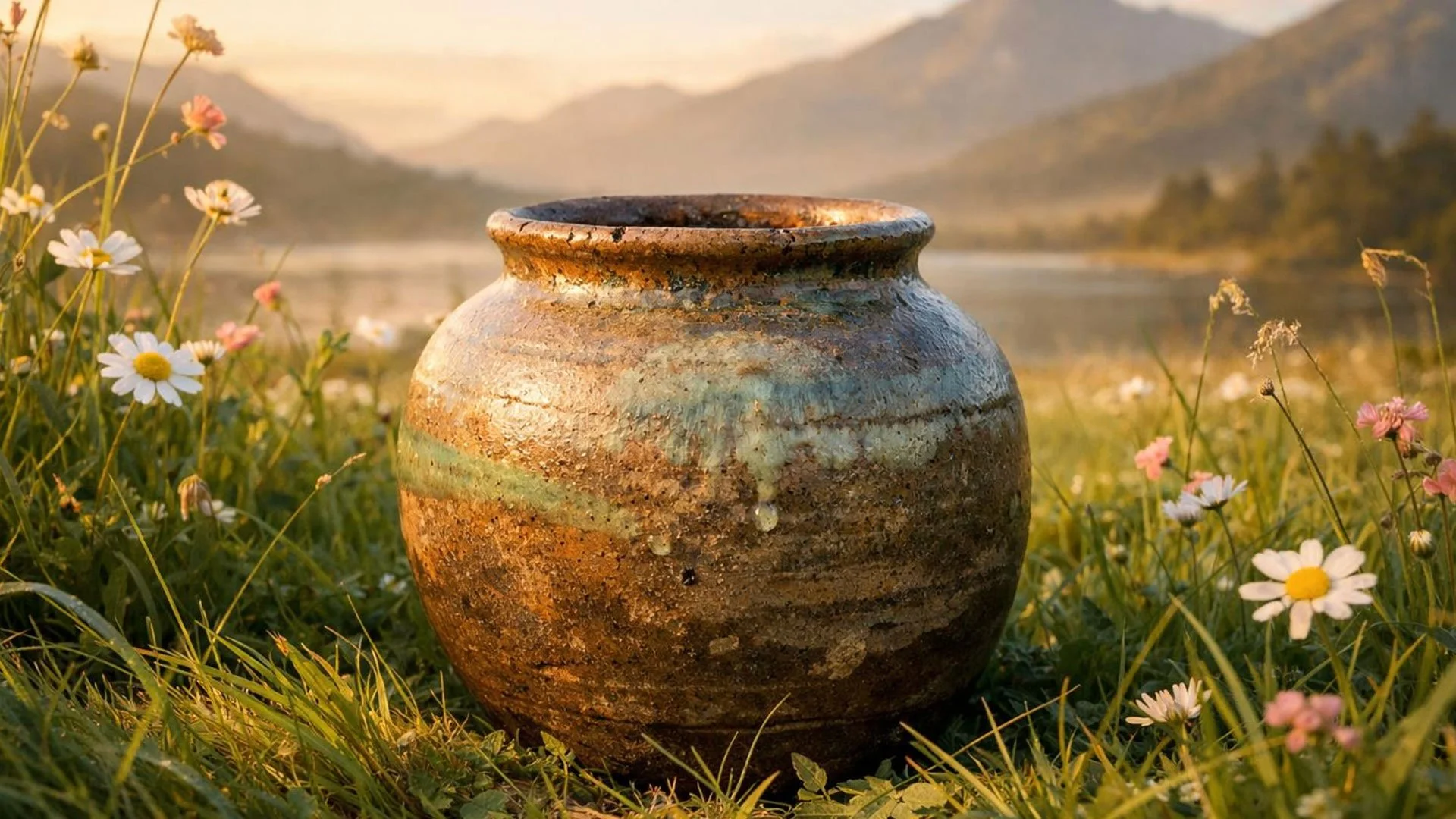
Wabi-sabi stands as an artistic approach which enables people to value imperfect things, simple designs, and natural alterations. Through this practice, we discover beauty in our unfinished and weathered state and our fleeting nature as human beings.
“What is imperfect is human. What is human is beautiful.”
The Wisdom of Wabi-Sabi
Reduces unnecessary self-judgement.
Softens the need for control.
Encourages acceptance of change and ageing
Living the Wabi-Sabi Way
Accept your flaws with compassion.
Appreciate simplicity over excess.
See meaning in unfinished journeys.
Peace comes when you stop trying to perfect life—and start living it.
4. Shoshin: Maintain a Beginner’s Mind
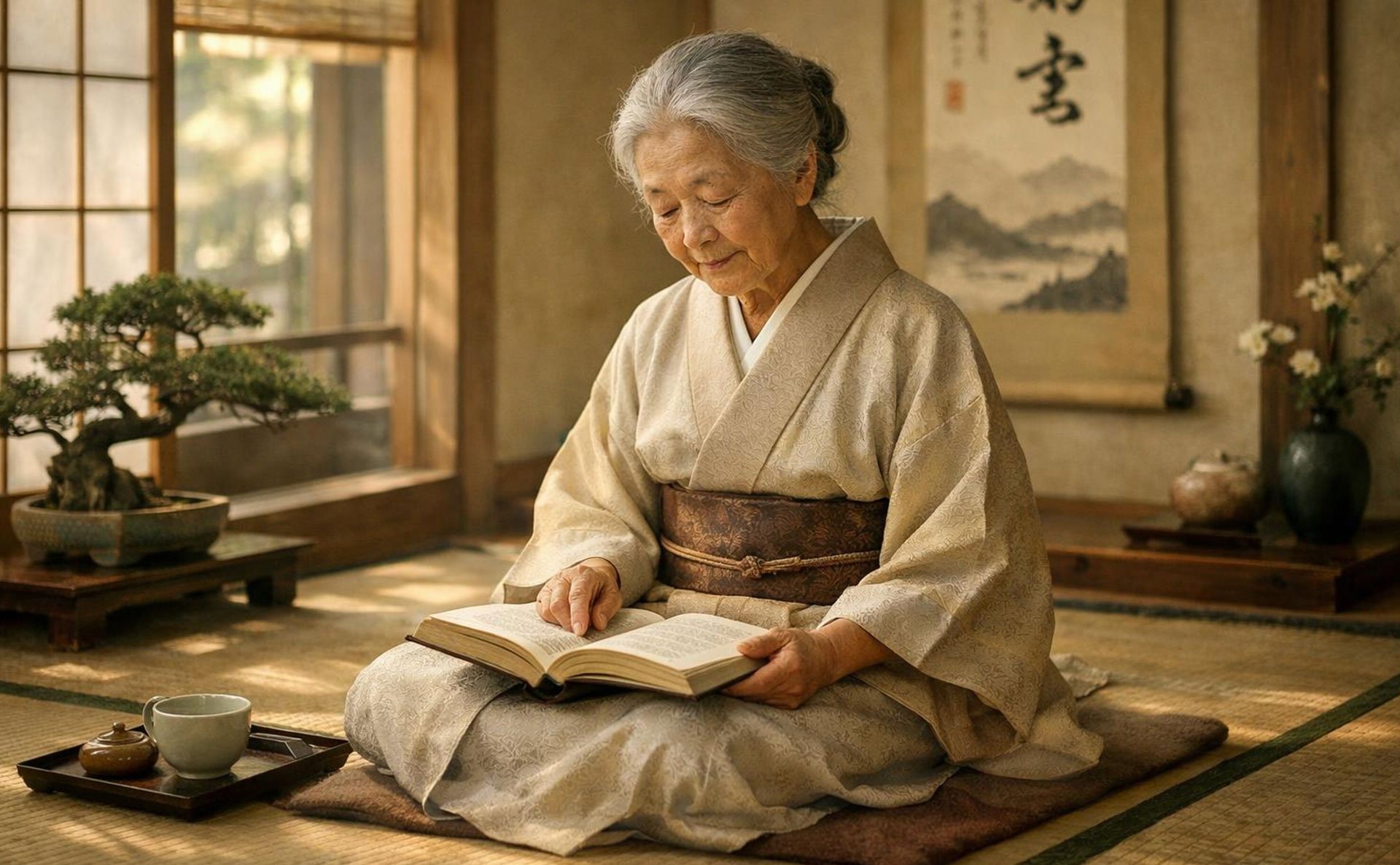
The concept of Shoshin refers to the practice of maintaining a beginner's mind, which means staying open and curious about life regardless of how much knowledge you have. It is the willingness to learn continually and remain humble.
“When you stop assuming you know, life begins to teach again.”
The Power of Shoshin
Encourages learning and adaptability.
Reduces rigidity and ego.
Keeps life curious and interesting.
Practising Shoshin
Ask questions often.
Let go of being “right.”
Approach challenges as experiments.
A beginner’s mind keeps life fresh, meaningful, and alive.
A person with a beginner’s mind keeps their life experience unrestricted and open to new possibilities.

5. Gaman: Endure Difficulty with Grace
Gaman means to preserve dignity while staying patient and composed through difficult times. It is not emotional suppression, but resilient self-control.
“True strength is calm endurance, not loud resistance.”
Benefits of Gaman
Builds emotional resilience.
Encourages calm responses under pressure.
Strengthens character through challenge.
Healthy Practice of Gaman
Accept discomfort without bitterness.
Stay composed under stress.
Balance endurance with support and rest.
Gaman turns suffering into maturity and struggle into character.
The practice of gaman leads to developing inner strength when used properly in difficult situations.
6. Ma: Value Space, Pause, and Stillness
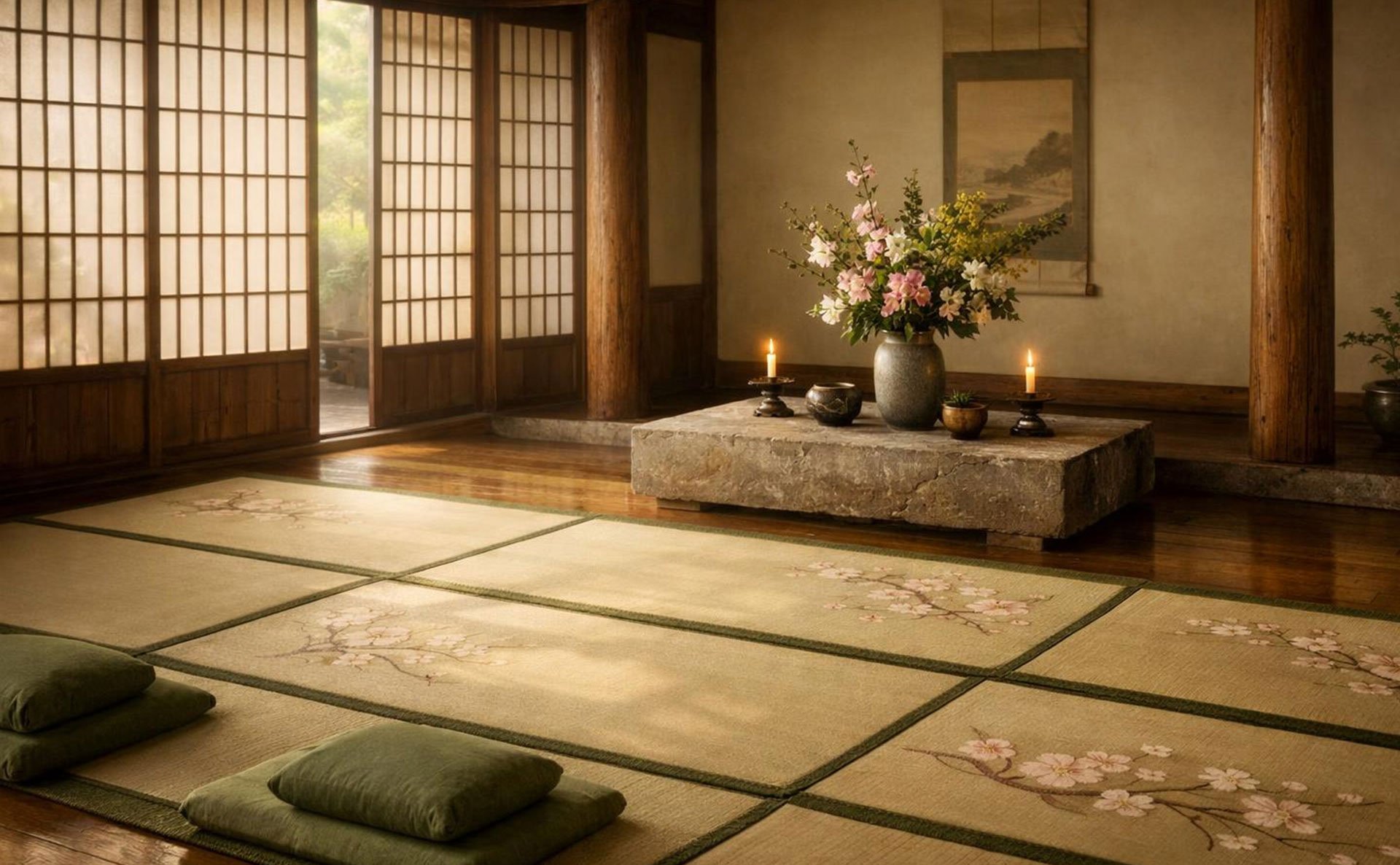
Ma functions as a spatial concept which defines the intervals between all forms of actions and spoken words, and mental processes. The system identifies rest and silence as fundamental elements which maintain equilibrium.
“Without space, nothing can breathe.”
Why Ma Matters
Reduces mental overload.
Enhances clarity and focus.
Improves communication and creativity.
Bringing Ma into Everyday Life
Pause before reacting.
Allow silence in conversations.
Create breaks between tasks.
In stillness, clarity speaks.
7. Kintsugi: Honour Your Breaks and Healing
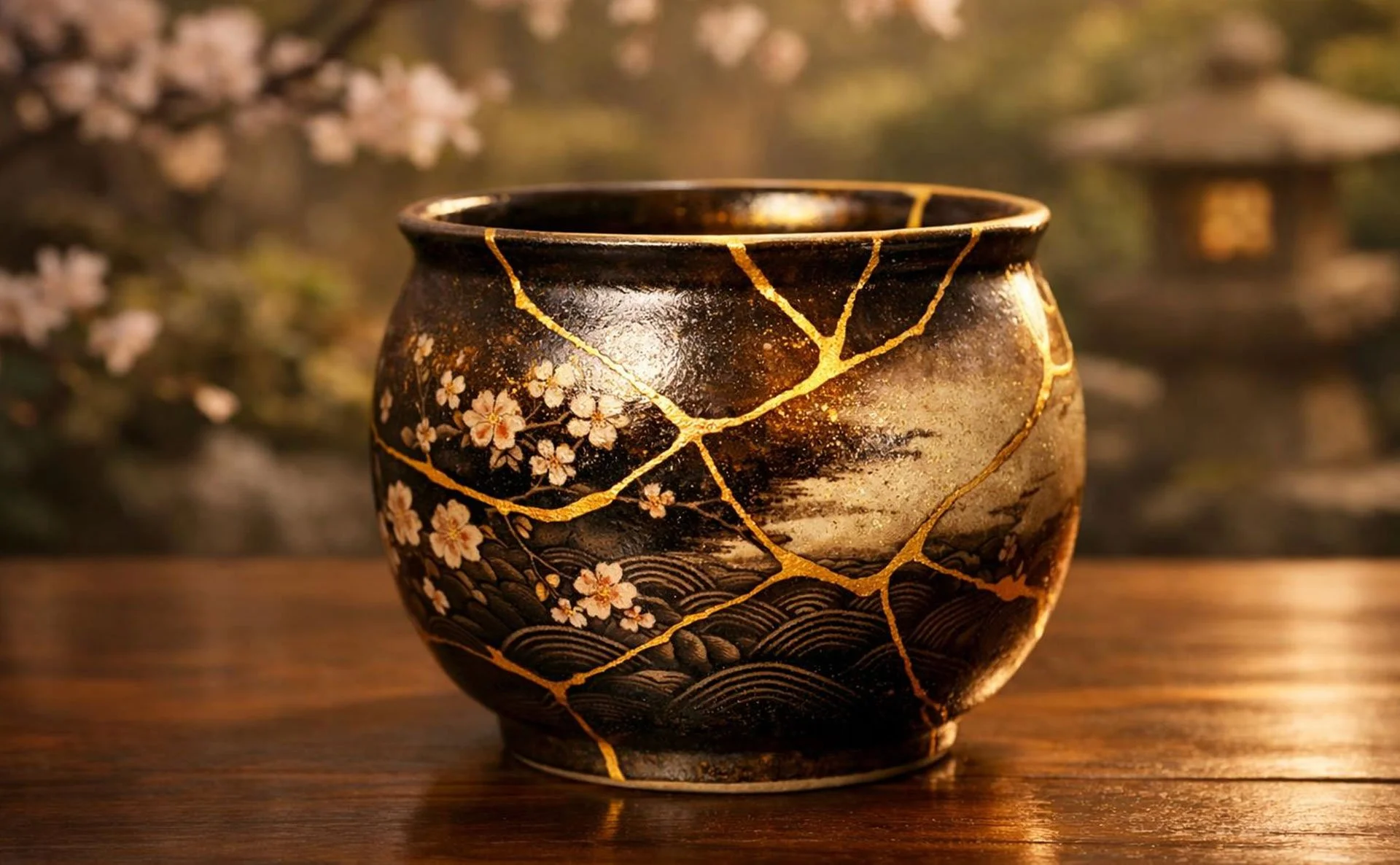
Kintsugi represents an artistic technique which uses gold to mend damaged pottery while maintaining the appearance of cracks as purposeful design elements. It represents the concept that pain combined with healing creates value instead of causing embarrassment.
“You are not broken—you are becoming.”
Lessons from Kintsugi
Healing adds value.
Failure enriches wisdom.
Vulnerability is strength.
Living with Kintsugi Wisdom
Own your story honestly.
Learn from mistakes.
Let experience shape—not shame—you.
Your past does not disqualify you; it completes you.

8. Seiri and Seiketsu: Create Order for Mental Clarity
Japanese culture shows its deep respect for life and mental clarity through its strong emphasis on order and cleanliness.
“When your environment is calm, your mind follows.”
How Order Improves Life
Reduces distraction and stress.
Improves focus and efficiency.
Creates a sense of stability.
Practising Simplicity
Keep what truly serves you.
Let go of excess gently.
Maintain spaces that support clarity.
Outer order nurtures inner calm.

9. Hansei: Reflect Honestly to Grow
Hansei is the practice of thoughtful self-reflection. A person must identify their errors by avoiding denial to see them as learning opportunities for personal development.
“Growth begins with humility, not judgment.”
Why Hansei Matters
Encourages accountability.
Transforms failure into learning.
Deepens self-awareness.
Practising Hansei
Reflect regularly.
Ask what you can improve.
Focus on learning, not blame.
Reflection shapes wisdom when guided by compassion.

10. Omoiyari: Live with Thoughtful Empathy
Omoiyari means to show deep care for others by predicting their needs and providing help without expecting any form of acknowledgement.
“True kindness needs no audience.”
Benefits of Omoiyari
Builds trust and harmony.
Reduces unnecessary conflict.
Strengthens relationships.
Living Omoiyari Daily
Communicate thoughtfully.
Consider others’ perspectives.
Practise kindness without expectation.
People who live with empathy develop a sense of belonging and find purpose in their lives.

11. Shinrin-Yoku: Restore Balance through Nature
Shinrin-yoku requires people to enter natural forest areas while staying awake to their environment.
“Nature does not rush, yet everything is accomplished.”
How Nature Heals
Calms the nervous system.
Restores mental clarity.
Encourages humility and presence.
Simple Ways to Practise
Walk slowly outdoors.
Engage your senses.
Disconnect from distractions.
Nature reminds us who we are beneath the noise.
12. Mushin: Release Overthinking and Trust the Moment
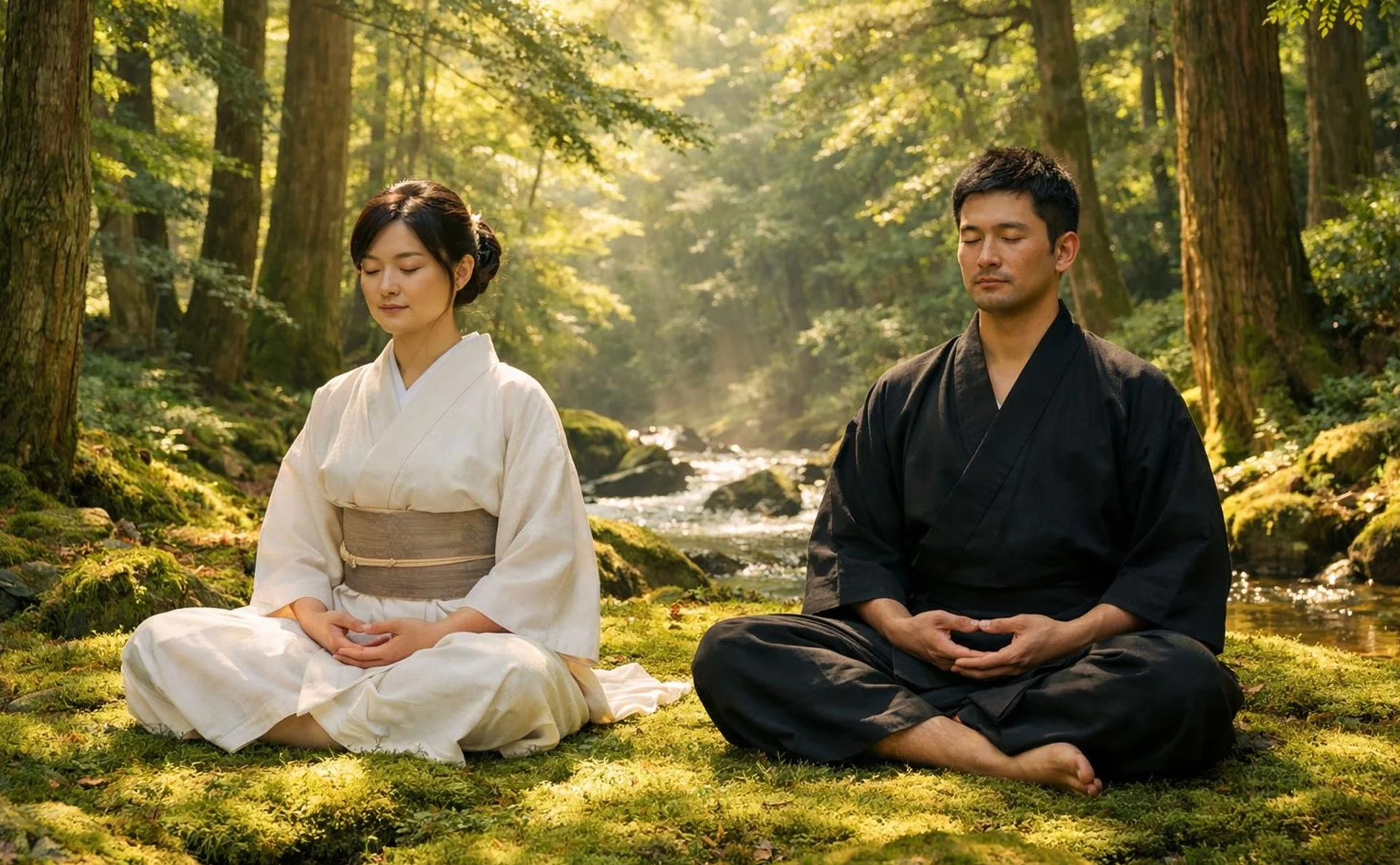
Mushin means “no-mind”—acting without fear, ego, or mental clutter.
“When the mind quiets, the heart leads.”
Benefits of Mushin
Reduces anxiety and self-doubt.
Encourages flow and focus.
Allows natural action.
Cultivating Mushin
Practice meditation or mindfulness.
Focus fully on one task.
Let go of constant evaluation.
Silence allows wisdom to surface.

13. On: Live with Gratitude and Humility
On recognizes the countless ways life supports us—through others, nature, and opportunity.
“Gratitude turns what we have into enough.”
Living with On
Acknowledge the help you receive.
Express appreciation openly.
Give back where possible.
Gratitude transforms enough into abundance.
Conclusion: A Life Guided by Quiet Strength and Balance
Japanese life principles teach us that progress needs no rush and no additional resources. The outcome develops through patience, intention, and harmony. Life attains stability and purpose through Ikigai practice which combines with Kaizen for continuous improvement and Wabi-sabi acceptance of imperfections and Omoiyari compassion practice.
“True improvement is gentle, patient, and deeply human.”
Start your journey from your present location. Move gently. Let wisdom—and not pressure—guide your way forward.