The Subscription Society: Redefining Ownership in the Age of Access
In the past, success was measured by what you owned. Homes, cars, books, and collections of physical objects defined our status, identity, and stability. Yet, in the span of a single generation, ownership itself has started to lose value as the global economy pivots towards something fundamentally different: a world built on access rather than possession.
The rise of the subscription economy signals the end of ownership as a cornerstone of modern life. This transformation is not merely a commercial trend; it’s a deep cultural shift with consequences for business, consumers, and society at large.
1. The Evolution from Possession to Permission
For centuries, ownership was the foundation of progress. To own something implied permanence, control, and independence. The farmer owned his land, the craftsman his tools, and the family their home. Possession brought not only security but also the right to determine how a resource was used.
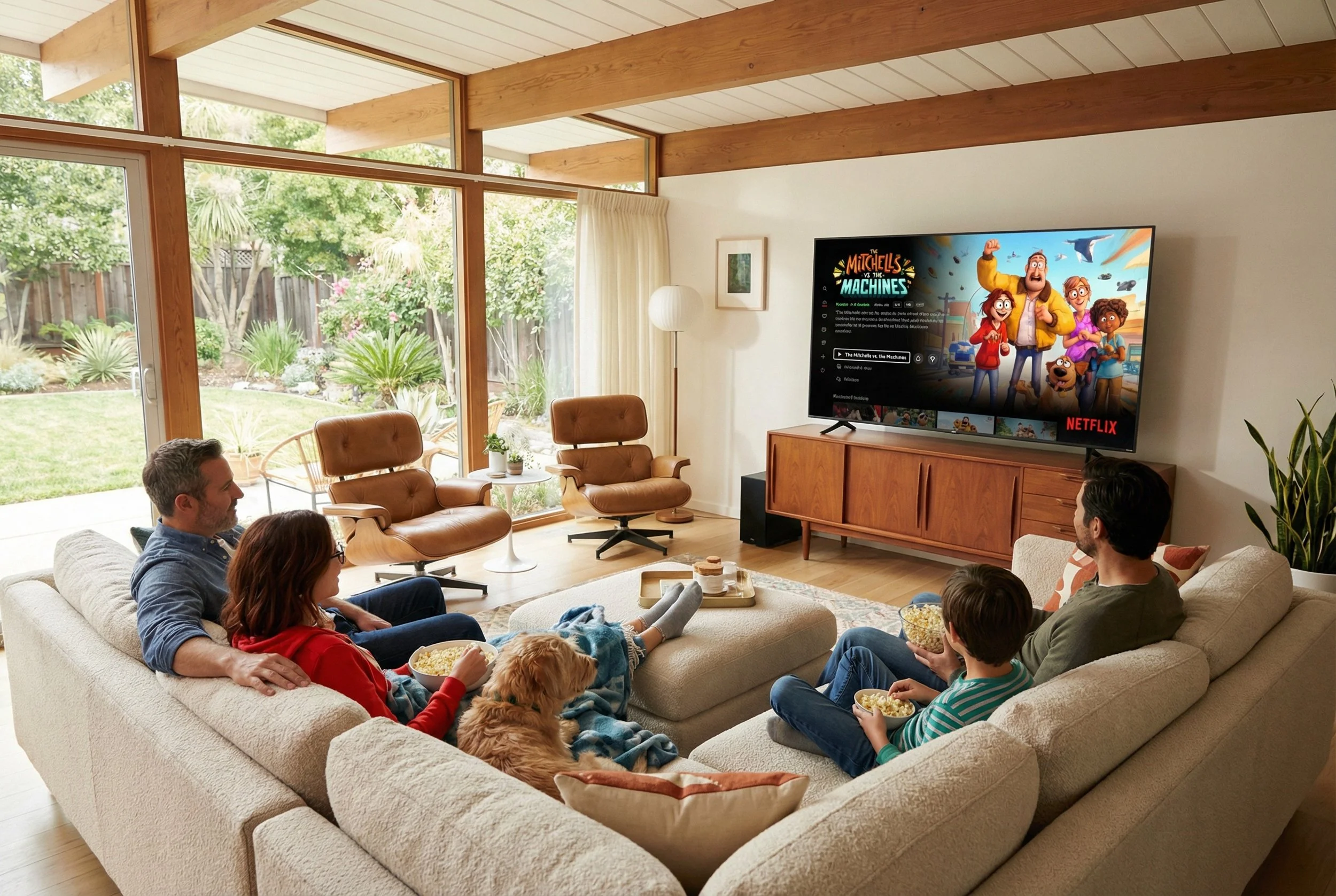
Then came the digital revolution — and with it, a redefinition of what it means to “have” something. We no longer own CDs or DVDs, but stream from vast libraries in the cloud. Software once sold in boxes now lives on subscription platforms. Even cars and clothing can now be rented through flexible models, where payment stops the moment usage stops.
This marks the gradual emergence of a permission‑based economy, where the individual’s power lies not in ownership but in continuous access, granted for as long as one can pay. It reshapes both our economic and emotional relationships to products and services.
“We are moving from buying to belonging, from permanence to participation.”
2. The Economic Engine Behind the Subscription Revolution
The subscription model isn’t accidental. It represents a structural recalibration of how businesses generate value in a digitised world.
2.1 Predictable Revenue and Lifetime Relationships
Traditional sales models depended on the volatility of single transactions. The subscription economy, by contrast, prioritises recurring revenue — stable, predictable, and easier to forecast. Companies no longer rely solely on winning a customer once; they build systems to retain them indefinitely.
This shift transforms the notion of success. Quarterly sales targets are now accompanied by metrics like customer lifetime value (CLV), churn rate, and retention ratios. In short, companies have moved from counting units sold to nurturing relationships sustained over time.
2.2 Data as the New Ownership
When businesses control continuous access rather than one‑off sales, they gain a far richer understanding of user behaviour. Every interaction — viewing patterns, usage times, renewal decisions — becomes data for optimisation. This information loop forms an intangible but immensely valuable asset.
Paradoxically, in this new economy, it is companies — not consumers — who become the true “owners”. They own the platform, the algorithms, and the data defining how we engage. While we gain convenience, we surrender visibility and a degree of control.
2.3 Scalability and Marginal Cost Advantage
Digital services scale with almost no additional cost per user. Once infrastructure is established, every new subscriber represents nearly pure margin. The economic logic is stunning: the bigger the network, the more efficient and profitable it becomes. Giants such as Spotify, Netflix, and Adobe epitomise this system — offering ever‑expanding choice at a price that feels affordable, while compounding their long‑term advantage.
3. The Psychology of Renting Life
Beneath the financial shifts lies a subtle but profound psychological transformation. Ownership once offered identity and permanence; access now offers flexibility and freedom. Yet, there’s a quiet cost to this new mindset.
3.1 The Perception of Unlimited Choice
Subscriptions create the illusion of abundance — millions of songs, thousands of films, endless software tools. This availability fosters a culture of sampling rather than savouring: we skim through experiences rather than engage deeply with them.
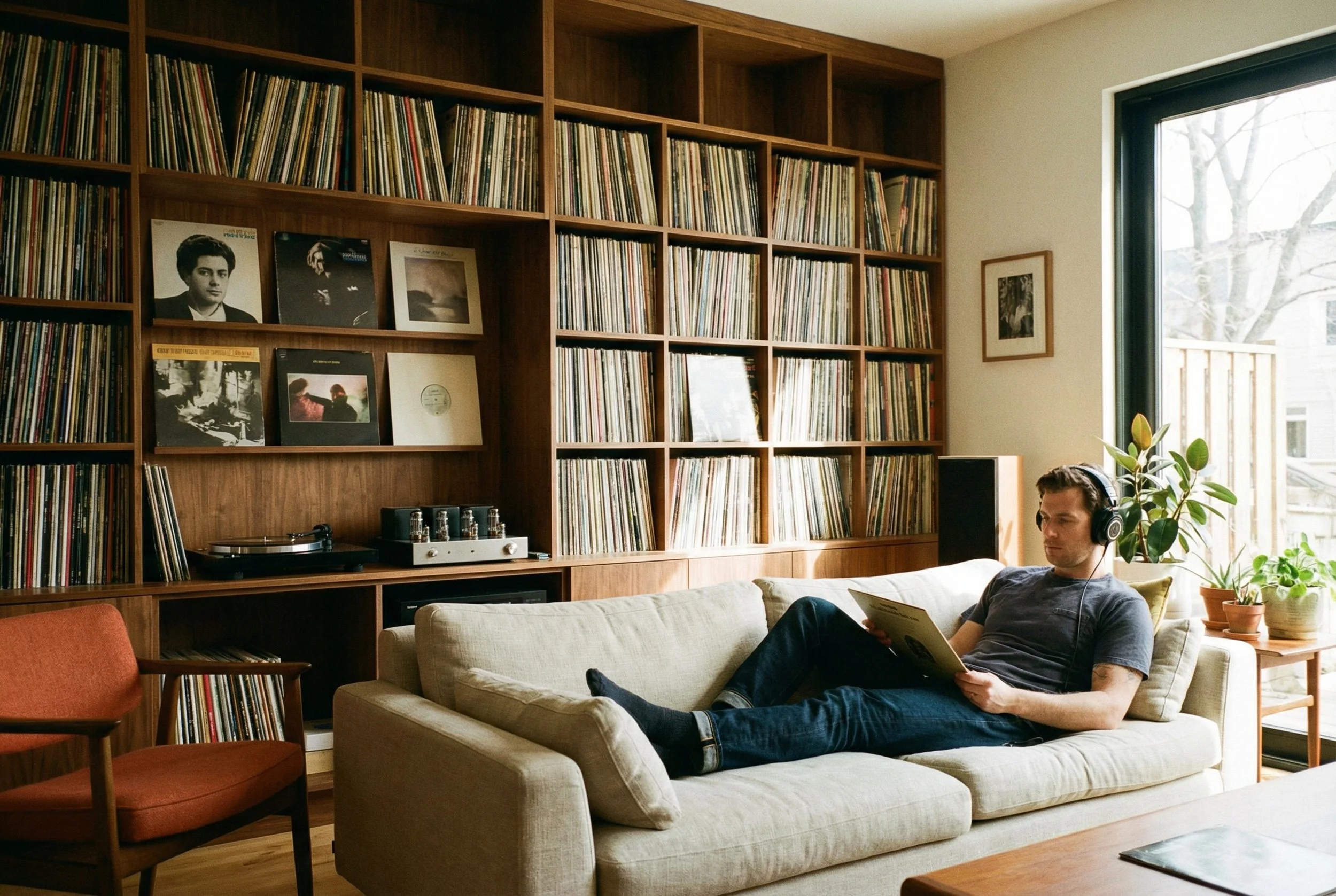
Digital access makes us curators rather than proprietors. Without ownership, the emotional bond between person and object diffuses. The pride once attached to a personal record collection or an impressive bookshelf gives way to algorithmic recommendations and disposable experiences.
3.2 Convenience Over Commitment
The subscription model fits perfectly within a time‑poor, change‑oriented society. Consumers choose flexibility over permanence — commitments are replaced by rolling monthly fees. Yet, what begins as liberation can morph into dependency.
No longer owning the tools we rely upon — from creative software to streamed entertainment — makes us permanently tethered to providers. Without connectivity or payment, access ceases. Convenience is purchased at the price of autonomy.
3.3 Financial Fragmentation
Subscriptions distribute cost into small, seemingly manageable amounts. But as everything from news to fitness apps demands monthly payments, consumers face “micro‑budget fatigue”. What once was an occasional purchase becomes a swarm of recurring debits.
The psychological effect is deceptive. Paying £9.99 feels trivial, but multiplied across multiple services, the cumulative spend becomes substantial. Fragmentation conceals total cost — a concern that both individuals and businesses are beginning to recognise.
4. The End of Ownership and the Rise of Dependency
When everything is rented, access becomes conditional on compliance with contracts, with payment, with platform policies. The end of ownership, therefore, quietly reconfigures power dynamics across society.
4.1 The Shift of Control
In the ownership era, your possessions existed independently of their creators. A book could be read indefinitely, a car repaired by any mechanic. In the subscription era, these relationships invert. Control rests with providers. They can modify terms, withdraw content, or retire functions remotely.
A consumer who “buys” an e‑book cannot transfer or lend it, because legally it is licensed, not owned. A company that uses cloud software is at the mercy of licensing updates and pricing tiers. The more embedded we become in ecosystems, the harder it is to leave them.
4.2 The Fragile Nature of Digital Assets
Unlike physical property, digital access has no solidity. A terminated subscription instantly erases entire collections, projects, or archives. This raises serious questions of digital permanence.
Governments and regulators are beginning to consider whether consumers need equivalent rights to access digital goods they’ve purchased — a debate likely to intensify as nearly all creative, commercial, and logistical activities migrate online.
4.3 Dependency as the New Default
In a subscription society, dependency is both the product and the business model. We depend on platforms to work, entertain, and socialise. The risks of disconnection — whether from non‑payment or corporate decision‑making — are tangible.
A healthy economy balances dependence with resilience; an over‑subscribed one risks fragility. The challenge for business leaders, then, is not merely to capitalise on the model but to design systems that preserve trust and user agency.
5. Sustainability and the Shared Economy
To frame the subscription revolution purely as a loss would be overly simplistic. There are also powerful sustainability and efficiency gains embedded in this new model.
5.1 Less Waste, More Circulation
Subscription and sharing models can reduce waste by promoting reuse and shared utilisation. Car‑sharing services decrease the number of privately owned vehicles; clothing rental platforms extend the life cycle of fashion items. Instead of producing items for single-use or long-term storage, resources are optimised through circulation.
5.2 Aligning Incentives with Longevity
In a world of single‑sale transactions, manufacturers had little direct interest in how long a product lasted. Subscription models, however, reward durability and service quality, since revenue depends on continued user satisfaction.
When success is measured by retention, providers have a vested interest in maintaining reliability, responsiveness, and transparency. Businesses that grasp this alignment can turn the subscription model into an ethical and sustainable advantage.
5.3 The Circular Connection
The subscription economy dovetails with broader movements such as the circular economy and product‑as‑a‑service models. Together, they propose a system where resources are in constant motion — designed to be updated, reused, and recycled rather than discarded.
This convergence points towards a deeper social reconfiguration: one where success is measured less by what we own, and more by how efficiently we can share and sustain what exists.
6. The Business Implications: Competing in the Age of Access
For leaders and organisations, the rise of the subscription model demands a fundamental rethink of strategy, culture, and customer management.
6.1 Transformation of Business Models
Many firms have already pivoted, from software to transport to consumer goods. Adobe’s transition to cloud‑based subscriptions reshaped the software industry. Automakers such as Volvo and BMW now offer flexible usage plans rather than straightforward sales. Even traditional industries, like healthcare and education, are exploring subscription‑based hybrids.
At the core lies a redefinition of what a company sells: not a product, but an ongoing relationship. Businesses must therefore master the art of managing engagement, consistency, and renewal rather than transaction.
6.2 The New Competitive Landscape
Entry barriers have shifted. In subscription markets, switching costs and brand stickiness often outweigh price sensitivity. Customer experience and trust become decisive differentiators. Companies must invest not only in acquisition but in retention — ensuring every interaction reinforces reliability and value.
Those failing to adapt face what could be termed subscription fatigue at the customer level and margin compression at the provider level. The balance lies in offering genuine utility, transparent pricing, and seamless service transitions.
6.3 Leadership in the Subscription Era
Executives now lead in a context where customer loyalty is earned monthly, not granted indefinitely. This demands adaptable governance, agile pricing strategies, and constant innovation.
Thoughtful leadership will also address ethical dimensions: ensuring consumers understand the terms of engagement, safeguarding data privacy, and promoting fair digital rights. In a society without ownership, trust becomes the ultimate currency.
7. Cultural Repercussions: Redefining Success and Identity
The implications go beyond economics. The end of ownership subtly remoulds our cultural and personal sense of achievement.
7.1 The Status Shift
Owning once signified stability and autonomy. The subscription society celebrates mobility and adaptability instead. The symbols of status become experiential — the ability to access diverse options rather than hold a single asset.
While this may align with modern values of freedom and environmental consciousness, it also risks creating a more transient sense of identity. When access can be revoked, permanence disappears from personal narrative.
7.2 Legacy in a Leased World
A deeper, often overlooked consequence lies in the question of legacy. What happens to our digital libraries, creative works, or purchased content after we are gone? In many cases, the answer is simple: they vanish. Licences expire, accounts close, and digital footprints dissolve.
For future generations, inheritance might shift from physical collections to data access rights — introducing new complexities for legal, cultural, and emotional continuity.
7.3 The Human Desire to Possess
Psychologists suggest that ownership satisfies a deeper instinct: control, familiarity, and assurance. The absence of permanence can breed subtle unease, even if offset by convenience. A fully subscription‑based lifestyle therefore challenges not just our wallets, but our psychology.
The businesses and policymakers who recognise this tension — balancing access with genuine security — will be best placed to lead the next stage of this evolution.
8. The Path Ahead: Reclaiming Agency in the Subscription Century
The subscription system is not inherently flawed. It can drive innovation, sustainability, and accessibility. But it also requires conscious governance to prevent the erosion of autonomy.
8.1 Designing with Dignity and Choice
Businesses that succeed in the long term will treat subscribers not as captives but as partners. True loyalty emerges when customers feel empowered — able to pause, leave, or customise without penalty.
Ethical design practices, transparent metrics, and flexible models will define the next generation of subscription businesses. The companies that build with dignity by design will thrive in an otherwise crowded and competitive landscape.
8.2 Regulation and Digital Rights
Governments and trade bodies are slowly catching up. Debates on digital ownership and consumer data rights are intensifying across Europe and beyond. In time, legislation could mandate greater transparency and portability of purchased digital goods.
Such measures, if well‑balanced, would not hinder innovation but rather restore a sense of fairness to the digital economy. Businesses that anticipate and integrate these eventual standards early will gain both reputational and competitive advantages.
8.3 Towards a Balanced Future
Perhaps the future need not be a binary between ownership and access. Hybrid models may emerge — where individuals can “own” the core and “subscribe” to enhancements or updates. This approach retains accountability and continuity while leveraging flexibility.
Imagine a future where digital property is permanently linked to identity but access remains portable and upgradable. Ownership and access, reimagined together, could yield a more equitable and empowering system.
Conclusion: The Meaning of Having in a World of Access
The subscription society signals more than a business trend; it marks a turning point in how humanity relates to value, permanence, and control. What began as a digital experiment has become the organising principle of modern life — reshaping industries from entertainment to infrastructure.
Yet, in this race for convenience and continuity, we must ask what we might lose: autonomy, permanence, and sometimes even the clarity of ownership itself.
“The challenge for businesses and society is not to reject the subscription model, but to ensure that access does not come at the cost of agency.”
As the line between possession and participation continues to blur, one truth stands firm: the future belongs to those who design systems that empower, not entrap. Whether through technology, policy, or human‑centred innovation, our task is clear — to redefine ownership for an age of access, without forgetting the enduring need to belong to something of our own.