The Ultimate Foldable Smartphone Buying Guide (2026/2027)
What Is a Folding Smartphone?
A folding smartphone (or foldable) is a mobile device incorporating a flexible active-matrix organic light-emitting diode (AMOLED) panel and an articulated mechanical hinge. Unlike conventional rigid handsets, foldables bend along a central axis without compromising structural integrity or display circuits.
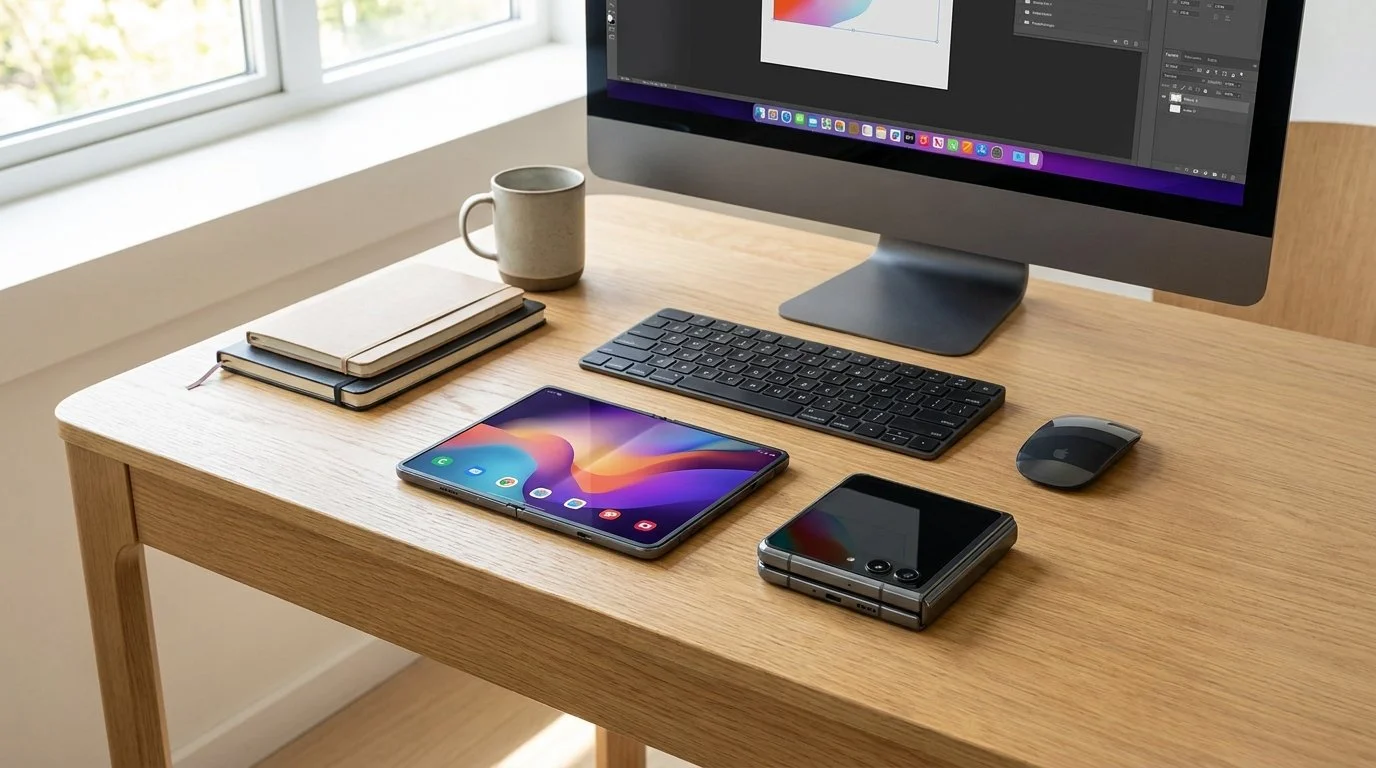
Modern folding handsets are divided into two distinct form factors:
Book-Style Foldables: Open horizontally like an e-reader. They function as a traditional smartphone on the exterior cover glass and unfold into an expansive 7.6- to 8.0-inch tablet-class canvas.
Clamshell-Style Flips: Fold vertically down the centre. They halve their physical footprint into a pocketable square when shut, using a secondary external cover screen for quick notifications, interactive widgets, and hands-free camera framing.
| Feature | Book-Style Foldables | Clamshell Flip Phones | Traditional Slab Flagships |
|---|---|---|---|
| Form Factor Utility | Expands into a dual-screen tablet | Compresses into a compact square | Fixed, single-screen rectangular chassis |
| Typical Display Sizes | Cover: 6.2″–6.5″ / Inner: 7.6″–8.0″ | Cover: 3.6″–4.0″ / Inner: 6.7″–6.9″ | Single panel: 6.1″–6.9″ |
| Average Device Weight | 215g – 245g | 185g – 195g | 170g – 230g |
| Multitasking Ability | 3-way split screen + floating panels | Standard Android / iOS split screen | Basic dual-split / single application |
| Ingress Protection | IP48 to IP68 rating | IP48 to IPX8 rating | Full IP68 dust- & water-tight |
| UK Price Spectrum | £1,400 to £2,000+ | £850 to £1,200 | £750 to £1,400 |
5 Critical Features to Check Before Buying
1. Hinge Architecture and Crease Depth
The mechanical hinge dictates device longevity. Modern flagships employ teardrop (water-drop) hinges, which curve the flexible inner display into a teardrop contour inside the chassis when closed.
Zero-Gap Closure: Ensure the two halves close completely parallel with zero wedge gap to prevent pocket grit from entering.
Free-Stop / Flex Friction: The hinge must maintain rigid resistance between 75° and 115°, enabling "Flex Mode" for hands-free video recording and desk conference calls.
2. Cover Screen Aspect Ratio
Early foldables featured tall, narrow cover screens that made one-handed typing difficult. Look for an external aspect ratio between 19.5:9 and 20.5:9. This ensures the phone feels completely natural when shut, avoiding the cramped keys of older 23:9 formats.
3. Dust Ingress and Water Resistance (IP Ratings)
Water Ingress (IPX8): Protects against continuous freshwater immersion up to 1.5 metres for 30 minutes.
Particle Resistance (IP48 or IP68): Moving mechanical parts remain vulnerable to grit and sand. If you work outdoors or live near coastal areas, select models with certified micro-sweeper bristles and foreign object protection (such as IP48 or IP68).
4. Optical Camera Hardware vs Chassis Thickness
Foldables measure between 4.5mm and 5.5mm per side when unfolded. Because chassis volume is strictly limited, they rarely carry the oversized 1-inch camera sensors or heavy 10x periscope barrels found in rigid camera flagships. Expect high-end primary sensors, but examine secondary telephoto lenses closely if high-zoom photography is central to your workflow.
5. Battery Endurance and Split-Cell Charging
Driving a 120Hz 8-inch screen consumes substantial battery power. Book-style handsets distribute dual battery cells across both halves (averaging 4,400mAh to 5,150mAh). Ensure the handset is powered by an efficient 3nm chipset and supports minimum charging speeds of 30W wired or Qi2 wireless.
The Top 5 Folding Smartphones to Buy in 2026/2027
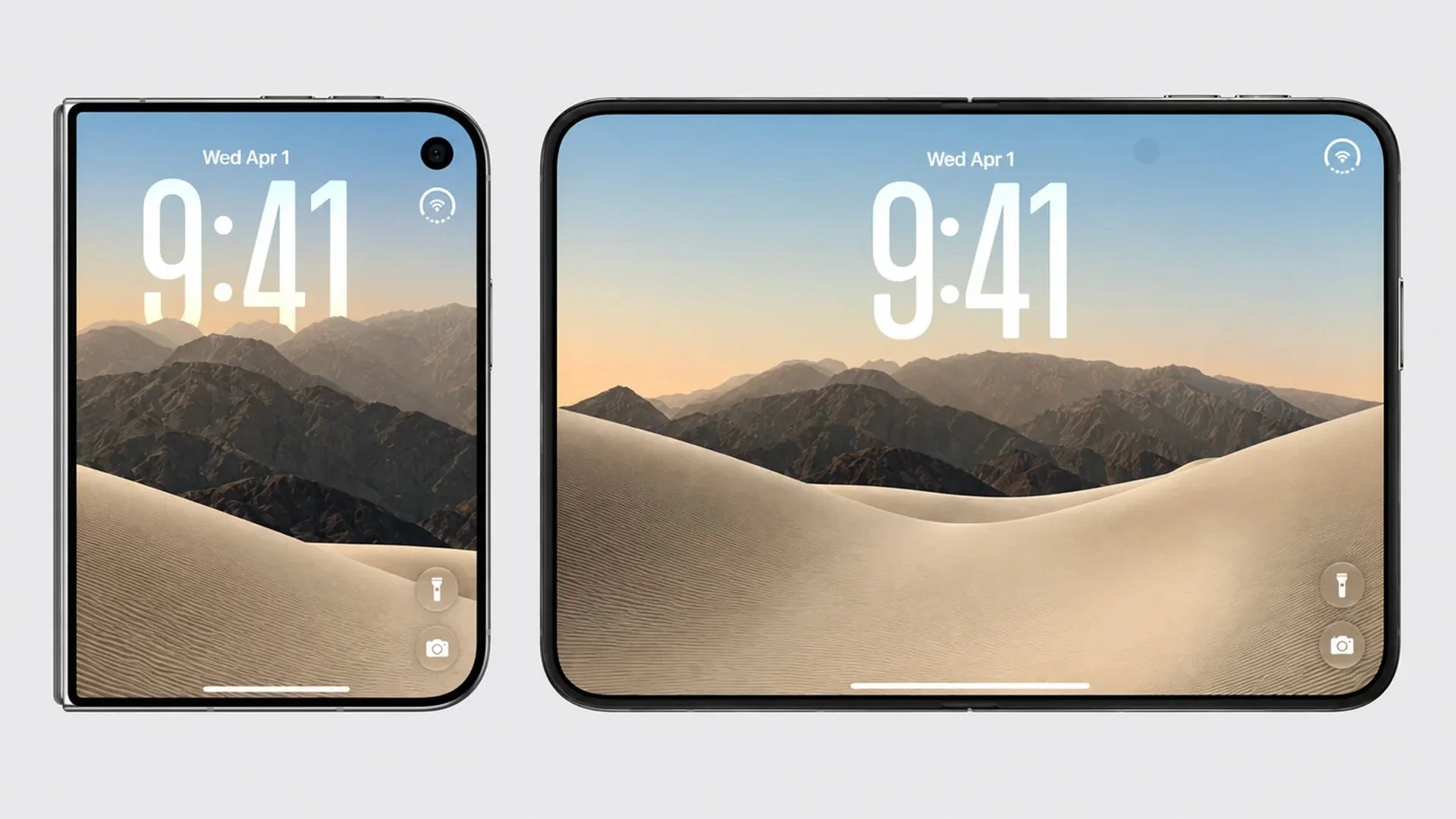
1. Apple iPhone Duo
Category: Best Flagship for iOS Ecosystem & Software Polish
Form Factor: Ultra-slim book-style
Core Specifications: Dual-pane micro-OLED panel, zero-gap aerospace titanium hinge, A19 Pro silicon, custom iOS Split-Space multitasking.
Why It Ranks: Apple’s entrance into the foldable market eliminates layout stutter with seamless app hand-off across macOS, iPadOS, and iOS. The crease profile is virtually imperceptible under indoor lighting, though it carries a premium launch price (£1,799+).
2. Samsung Galaxy Z Fold 8
Category: Best for Enterprise Multitasking & Power Users
Form Factor: Book-style
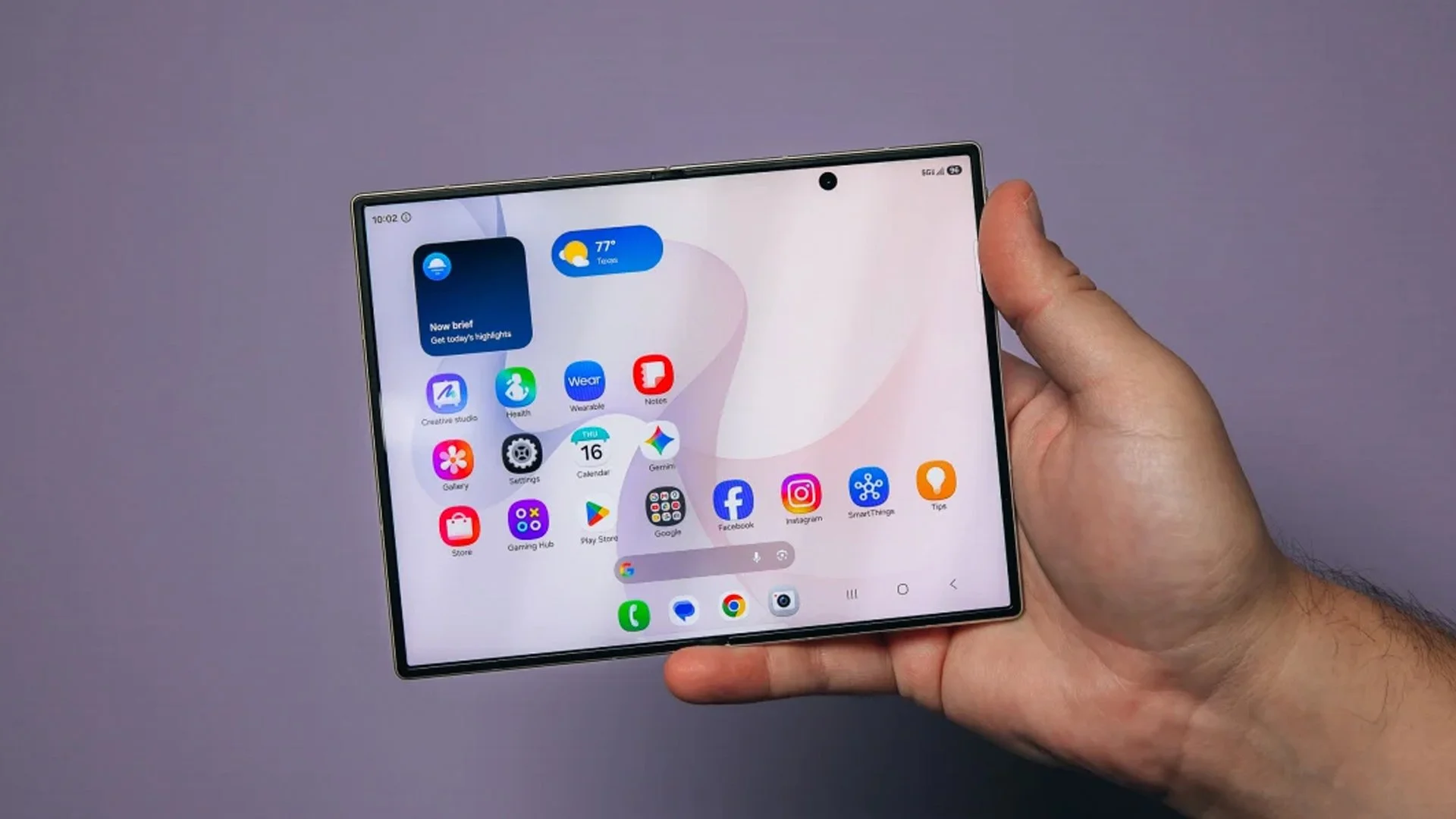
Core Specifications: 7.6-inch Dynamic AMOLED 2X inner canvas, 5.5-inch cover screen, Snapdragon 8 Elite platform, active S Pen stylus support, IP48 protection.
Why It Ranks: The undisputed market leader in enterprise productivity. Samsung’s One UI offers a persistent desktop-style taskbar, intuitive drag-and-drop file transfers, and multi-window memory presets.
3. Google Pixel 10 Pro Fold
Category: Best for Mobile Photography & Clean Android
Form Factor: Book-style
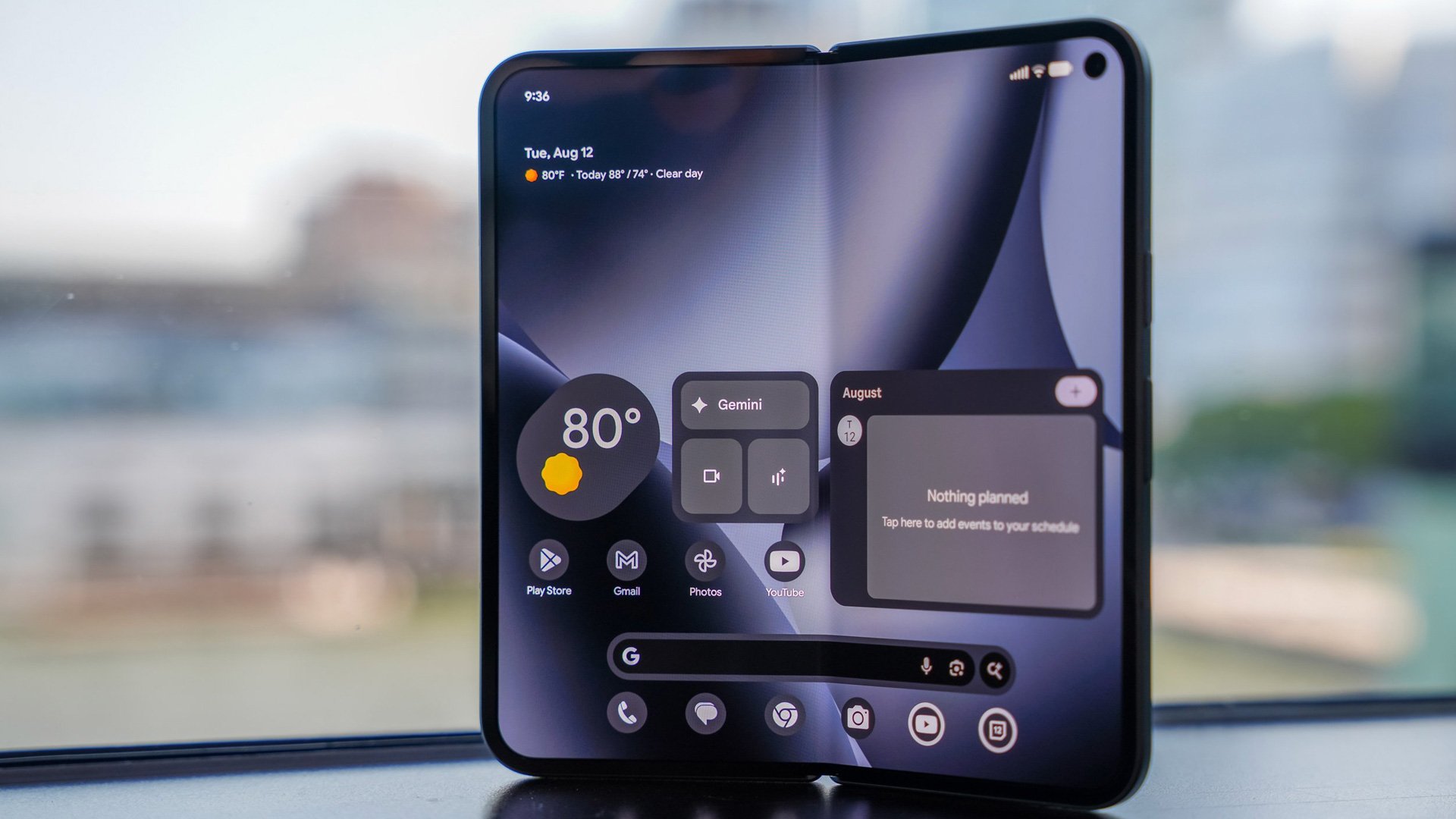
Core Specifications: 8.0-inch Super Actua Flex inner display, 6.4-inch outer panel, Google Tensor G5 processor, dedicated 5x optical periscope telephoto, IP68 water/dust rating.
Why It Ranks: It delivers the most comfortable passport-sized exterior screen paired with Google’s computational photography pipeline, giving foldables image quality on par with traditional camera phones.
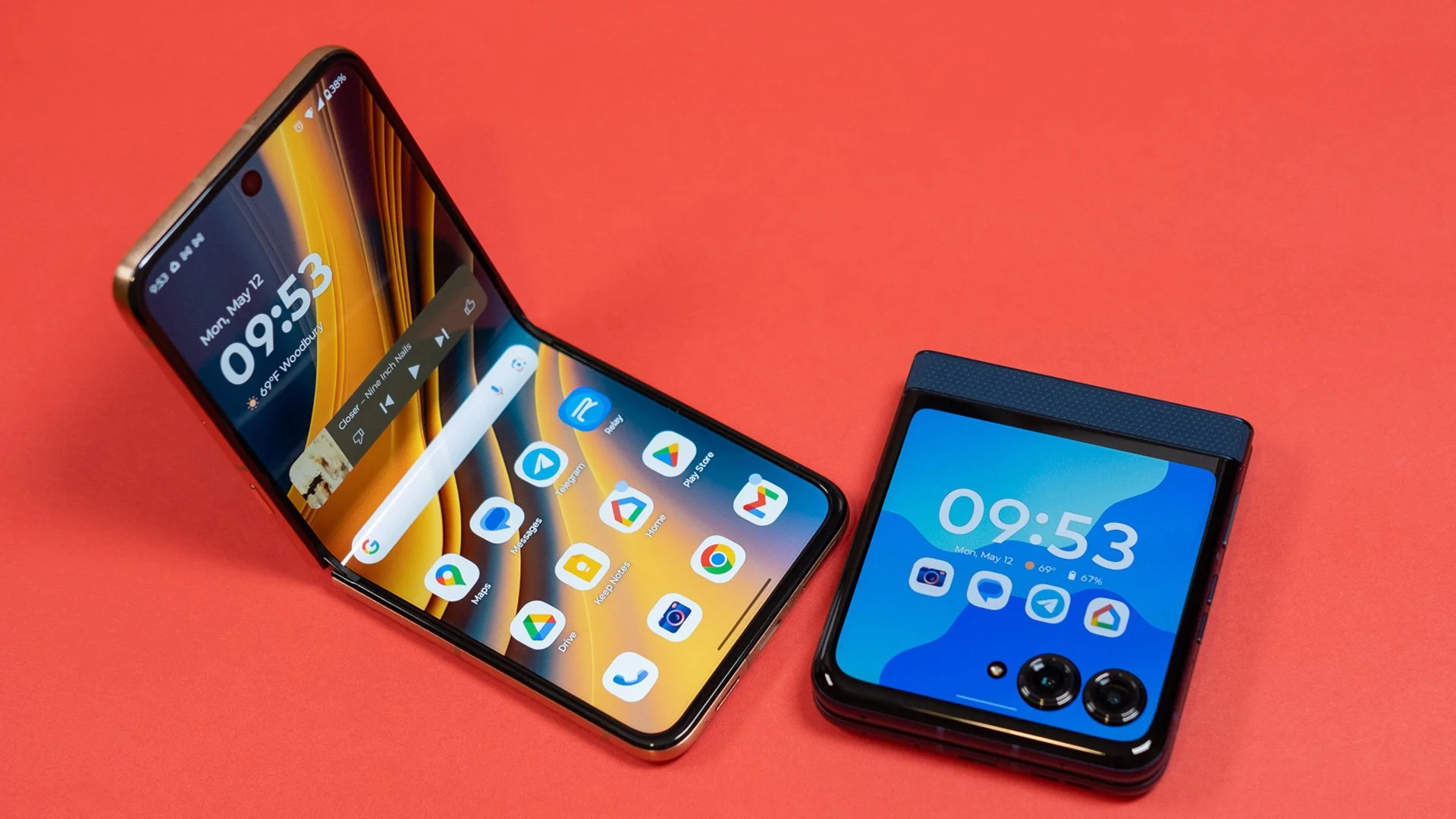
4. Motorola Razr Ultra
Category: Best Outer Screen Usability on a Flip
Form Factor: Clamshell flip
Core Specifications: 4.0-inch borderless 165Hz exterior OLED, 6.9-inch internal display, flagship Snapdragon processor, 68W TurboPower charging.
Why It Ranks: Motorola lets users run virtually any standard Android application directly on the exterior cover screen without third-party workarounds, minimising the need to flip open the phone for quick messages or map navigation.
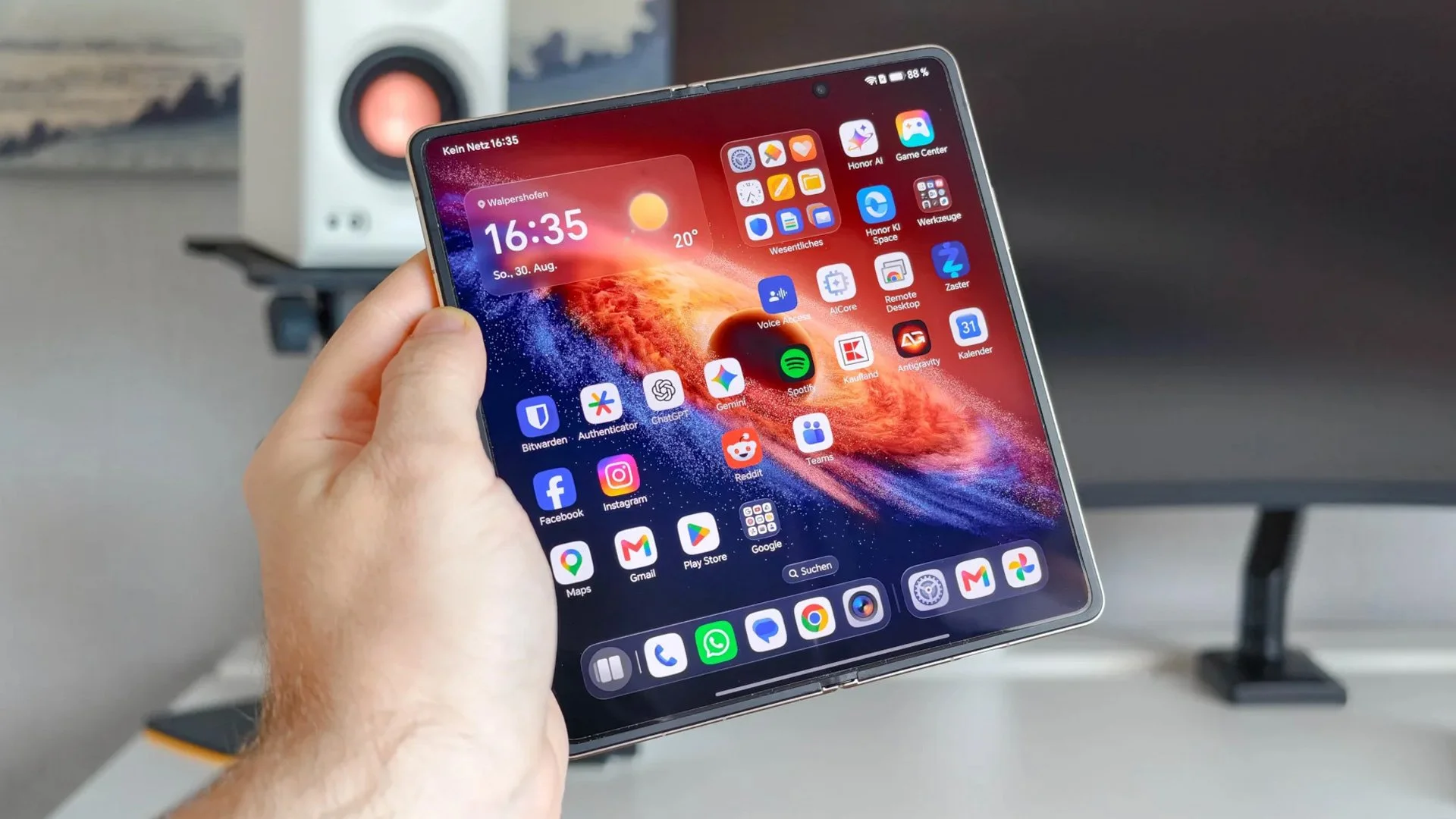
5. Honor Magic V6
Category: Best Ultra-Thin Mechanical Engineering
Form Factor: Ultra-slim book-style
Core Specifications: Sub-9.5mm folded profile, 5,150mAh silicon-carbon battery pack, 7.95-inch inner OLED, 66W fast charging.
Why It Ranks: It solves the bulk problem. Folded shut, it feels completely indistinguishable from a standard glass slab in your pocket, backed by silicon-carbon battery density.
Essential Ownership Realities: Costs, Repairs & Insurance
Never Peel the Pre-Applied Inner Screen Protector: The flexible display uses a factory-bonded polymer layer over Ultra-Thin Glass (UTG). Manually lifting this film can crack the digitiser or void manufacturer warranty cover.
Factor in Specialised Mobile Insurance: Standard home contents insurance often excludes mechanical hinge breakdown or flexible screen repairs. Replacing an internal display outside warranty costs between £400 and £700. Prioritise policies like AppleCare+, Samsung Care+, or premium packaged bank accounts that explicitly cover accidental foldable screen damage.
Hinge-Friendly Cases: Two-piece snap-on cases require adhesive strips to remain secured. Choose cases featuring integrated spring-loaded hinge bumpers to shield the central spine from corner-impact drops.
Frequently Asked Questions (FAQ)
-
Tier-one manufacturers rate modern hinges for 200,000 to 400,000 folds. At an average rate of 100 opening actions per day, the mechanical hinge is engineered to operate for roughly 5 to 10 years without mechanical failure.
-
Yes, running your finger directly across the hinge axis reveals a minor depression. However, with teardrop hinges and high-brightness OLED panels, the crease is practically invisible when viewing content straight-on.
-
Select book-style foldables—notably the Samsung Galaxy Z Fold series—support dedicated stylus pens (such as the S Pen Fold Edition). Always verify stylus compatibility before purchase, as using a standard rigid Apple Pencil or third-party metal stylus will permanently indent the softer Ultra-Thin Glass screen.